Awning Installation Types & Options
Every home is different. We offer four professional mounting methods to ensure a perfect, secure installation no matter your structure — wall mount, soffit mount, L-bracket, and roof mount.
Wall Mount
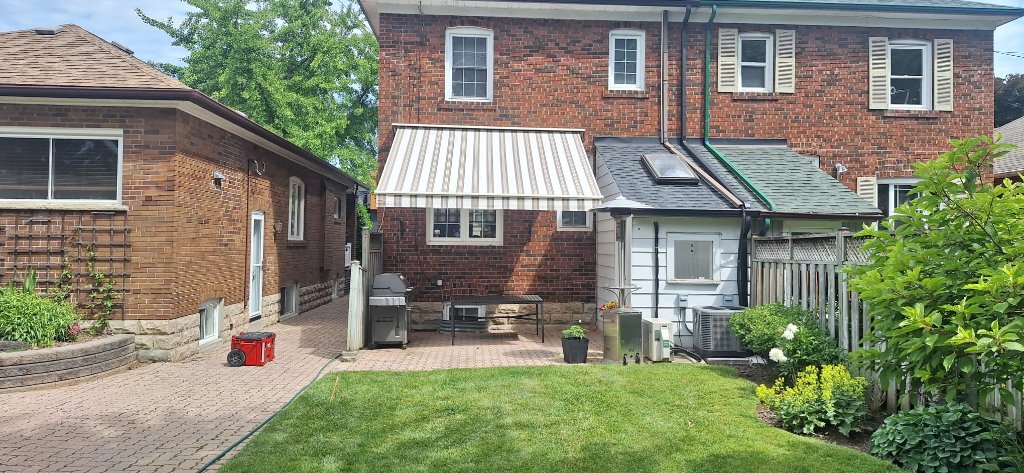
The awning bracket is mounted directly to the exterior wall of your home. This is the most common and straightforward installation method, suitable for most homes with a flat, accessible wall surface above the patio or deck area.
- Most common and cost-effective
- Works on brick, stucco, siding, and concrete
- No special hardware required
- Clean, flush appearance against wall
Soffit Mount
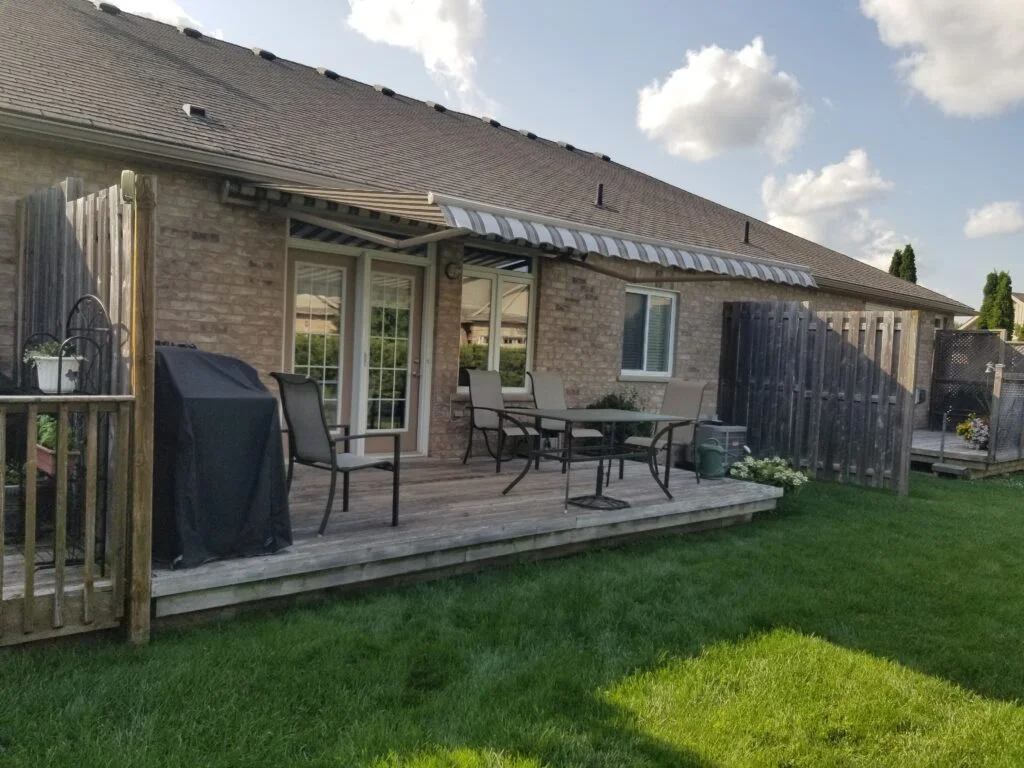
The awning is mounted to the soffit (the underside of the roof overhang). This is ideal when there is no suitable wall space, or when the roofline extends out over the area. The awning hangs from the soffit, projecting outward.
- Great when wall space is limited
- Works under any overhang or eave
- Maximizes shade coverage angle
- Clean overhead look
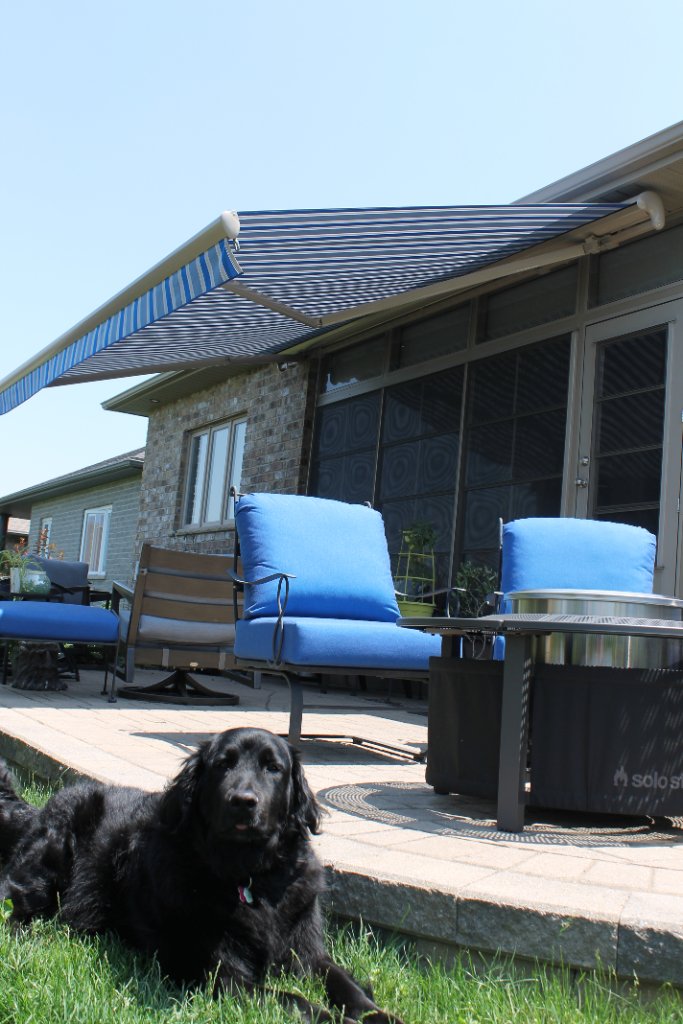
L-Bracket Mount
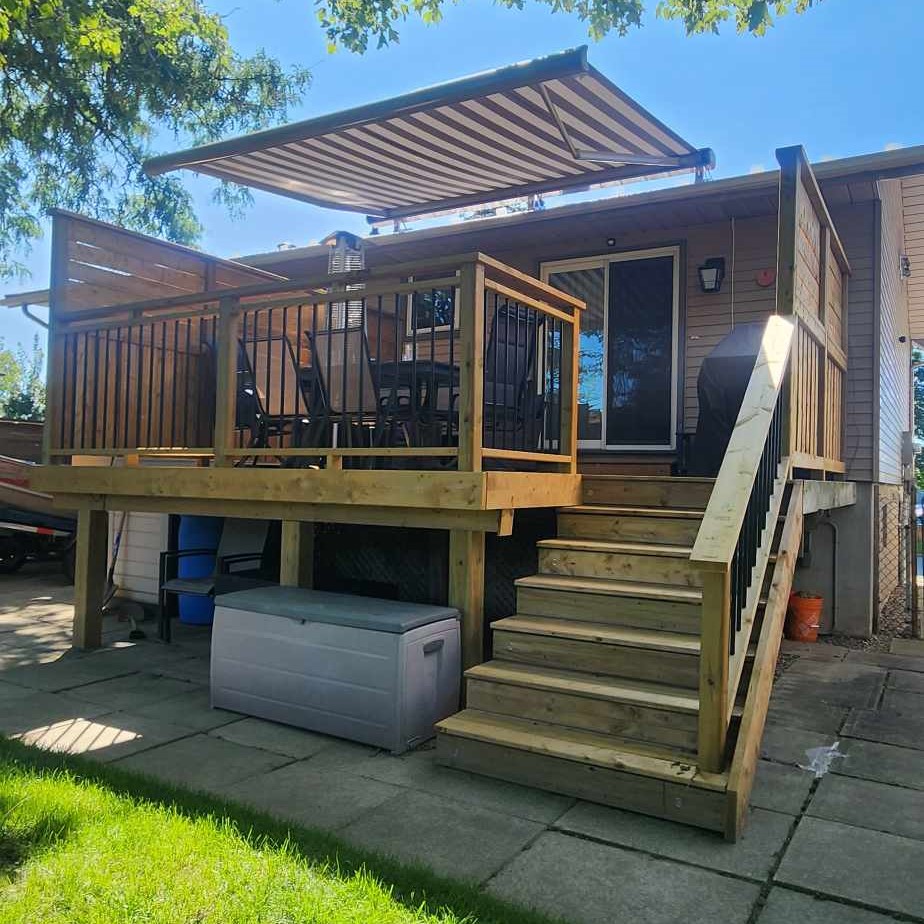
L-shaped steel brackets are fixed up into the soffit, similar to a soffit mount, but extend outward in front of the eaves. This allows the awning to be positioned further out from the wall and is used when the eave or overhang prevents a standard wall or soffit mount from working properly.
- Ideal when eaves block wall or soffit mount
- Allows precise positioning
- Strong and durable hardware
- Works with most architectural styles
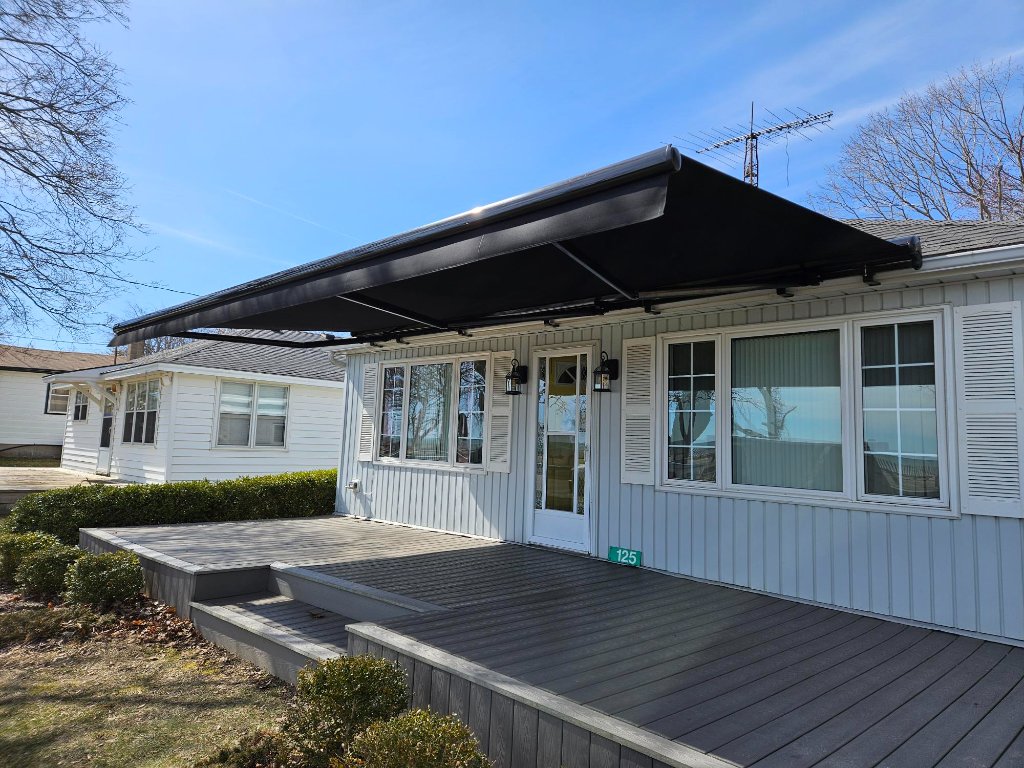
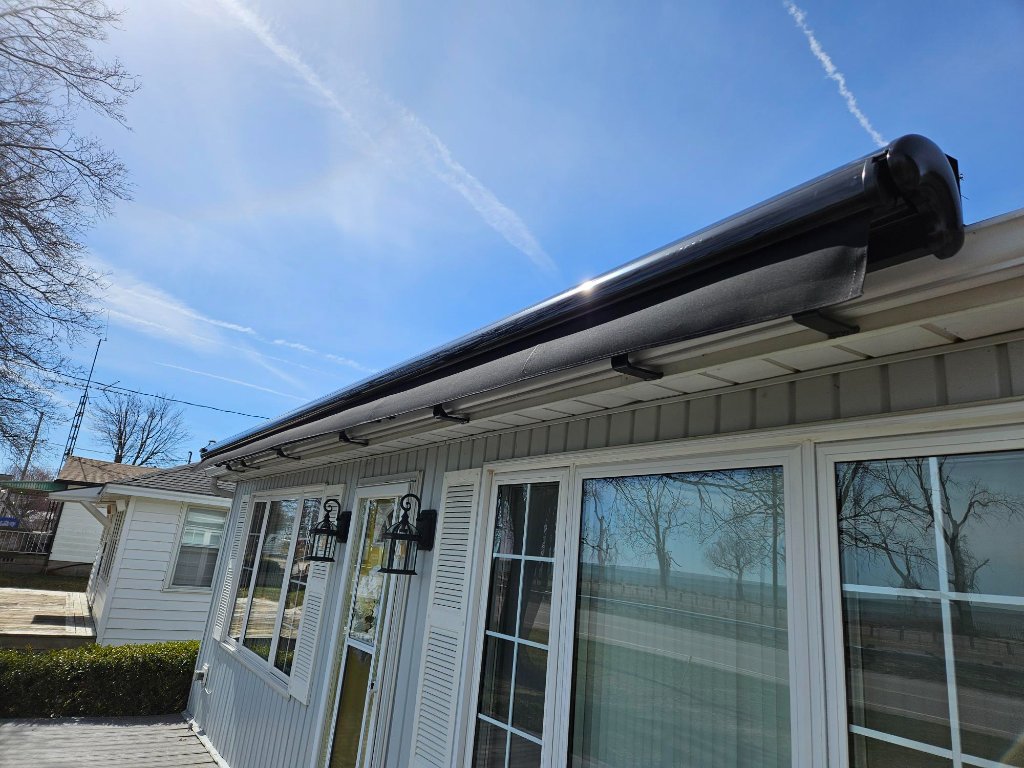
Roof Mount
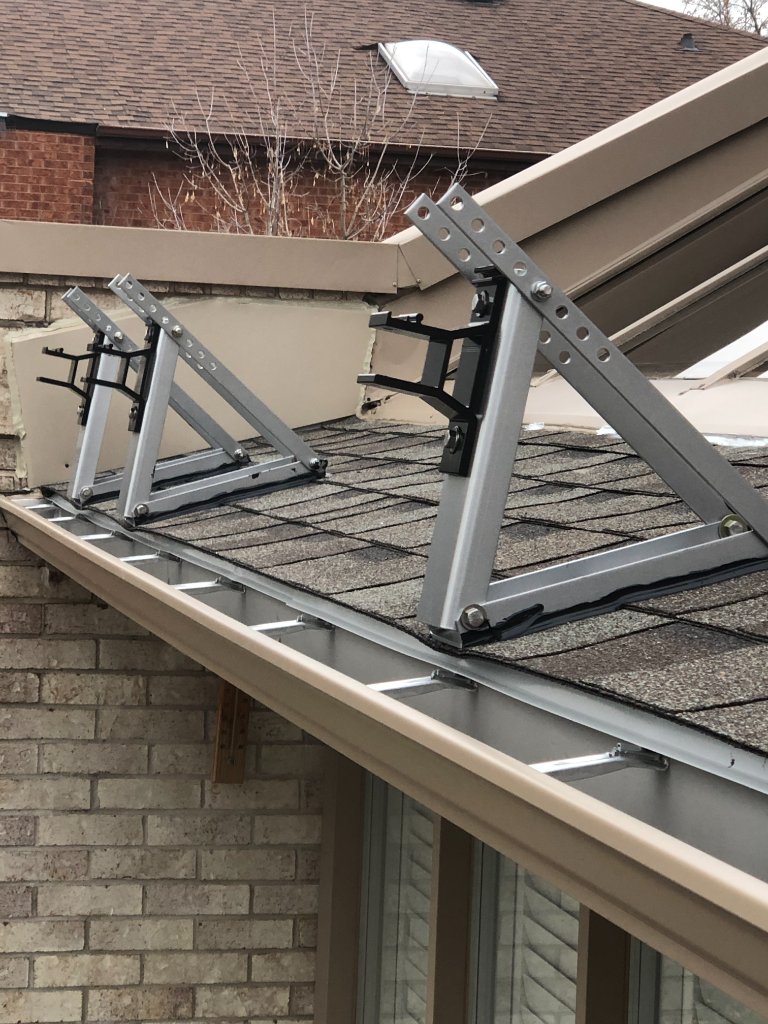
Custom brackets are anchored directly onto the roof surface, allowing the awning to be mounted even when no wall, soffit, or eave is accessible. Special angled brackets compensate for the roof pitch to keep the awning level.
- Works when no wall or soffit is accessible
- Suitable for flat and sloped roofs (asphalt shingle)
- Custom pitch-compensating brackets included
- Ideal for second-floor decks and unusual structures