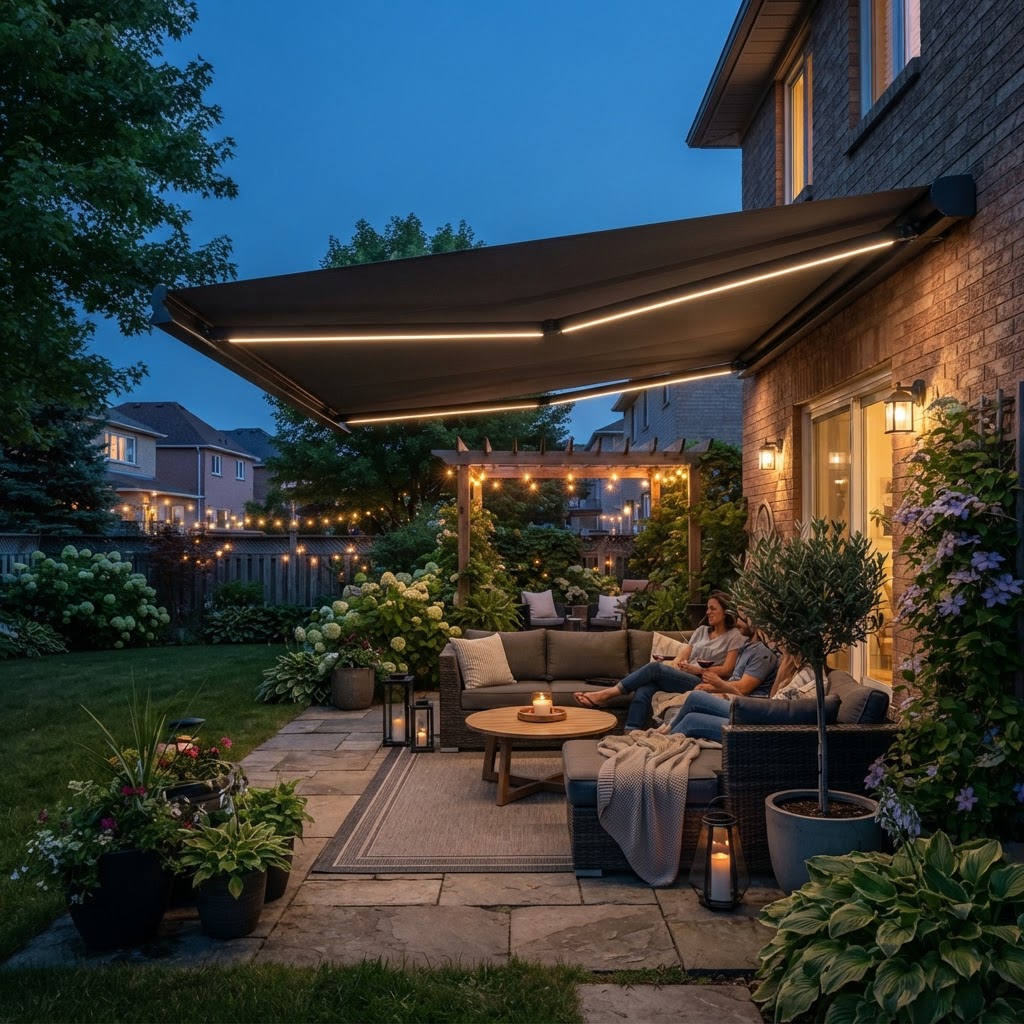
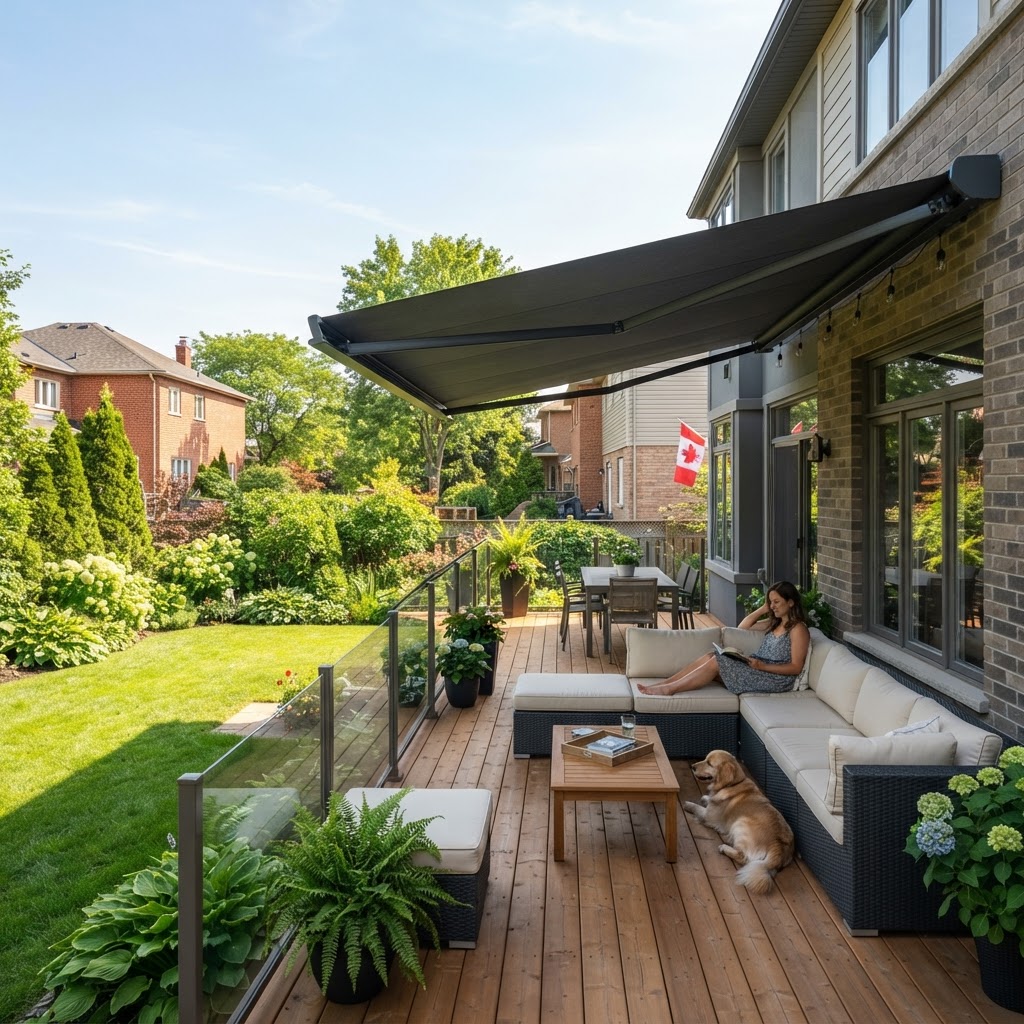
Awning Wind Sensor: When to Retract Your Smart Awning
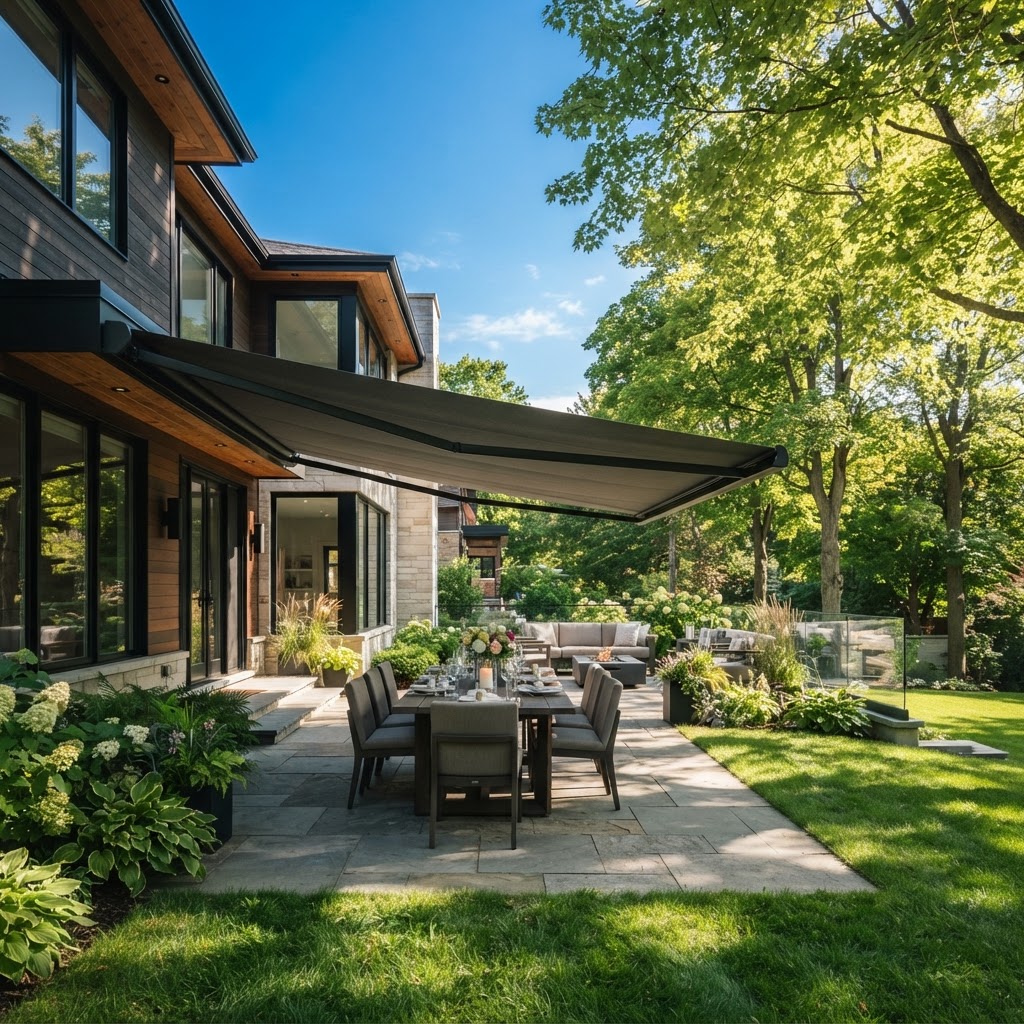
You should retract your awning whenever wind speeds consistently exceed 20-30 km/h, or when gusts become unpredictable. In Ontario, where a calm afternoon in Toronto or Mississauga can quickly turn into a blustery evening, relying on a smart awning wind sensor is the best way to prevent structural damage. These sensors act as your backyard's personal weather station, automatically retracting your FullCassetteAwning or open roll model the moment conditions become unsafe, giving you complete peace of mind while you are away or relaxing inside.
Why Wind Sensors are Essential for Ontario Living
Living in a province as vast and weather-diverse as ours means we experience everything from gentle lake breezes in Hamilton to sudden, powerful storm fronts rolling across Ottawa or London. A stationary awning is vulnerable to the "sail effect," where wind pressure can bend arms or rip fabric.
By integrating SmartFeatures into your outdoor space, you move away from manual guesswork. Instead of rushing home from work to roll in your awning because the clouds are turning grey, the sensor monitors real-time vibrations and wind speeds. It does the heavy lifting for you, protecting your OpenRollAwning from sudden gusts.
Understanding Sensitivity Settings
Not all wind sensors are created equal. Most smart systems allow you to calibrate the sensitivity. If you live in a particularly exposed area, you might prefer a lower threshold, meaning the awning retracts at even the slightest hint of a strong breeze. Conversely, if your home is tucked into a sheltered neighbourhood, you can set a higher threshold.
When you are ready to explore the options that best fit your home, check out our ProductConfigurator to see how these smart sensors can be paired with our various models. Whether you choose a sleek FullCassetteAwning that keeps the fabric hidden when retracted, or a robust SemiCassetteAwning, the sensor remains the most vital component of your system's longevity.
More Than Just Wind: A Total Weather Solution
While wind is the primary threat to awning integrity, modern smart systems often include more than just a wind trigger. Sun and rain sensors are popular additions for Ontario homeowners.
Imagine sitting down with your morning coffee. As the sun moves, the awning extends automatically to provide shade. If a light drizzle begins, the rain sensor tells the awning to retract to avoid water pooling, which can add significant weight to the fabric. By managing the weather through your smartphone app, you are not just buying an awning—you are curating an outdoor environment that adapts to your needs. If you have questions about how these systems integrate with your specific home layout, our Contact page is the best place to start a conversation.
Maintaining Your Sensor for Years of Use
To ensure your sensor remains reliable, treat it like any other smart device. Keep it clean of debris or bird nests that might interfere with its ability to measure wind vibrations. Periodic testing is also a great idea; at the start of every season, simulate a wind event to ensure the awning retracts properly. Taking these small steps helps your investment last, keeping your patio looking its best for years to come.
Frequently Asked Questions
Can I manually override my awning wind sensor?
Yes, most smart systems allow you to override the sensor via your smartphone app or a wall-mounted switch, though it is generally recommended to keep the sensor active to prevent accidental damage.
Will my awning retract if there is only a light breeze?
Generally, no. Sensors are designed to ignore minor fluctuations. You can adjust the sensitivity settings to ensure the awning only retracts when wind speeds reach a level that poses a legitimate risk to the hardware.
Do I need Wi-Fi for my awning wind sensor to work?
While Wi-Fi is required for app-based control and monitoring, the sensor itself is typically hardwired or battery-powered to communicate directly with the awning motor, ensuring it works even if your internet connection is down.